By Feng
1. Introduction
Through time and place, from the ancient ages to the modern era, from the sandy empires of ancient Islam to the reigning civilisation of the Greeks, mathematics has been a crucial building block of humanity. Yet throughout history, many mathematicians have failed to take the spotlight, with their brilliance stripped of praise. From the lack of recognition of certain races to a wheel of fortune landing geniuses in the wrong place at the wrong time, we must unearth the unseen and undercredited mathematicians who failed to shine as brightly as others.
All of you reading this know the likes of Isaac Newton, Pythagoras, Fibonacci, and many more, but many overlooked mathematicians have equally intriguing stories and key contributions.
2. Dan Quillen
Dan Quillen, born in 1940 and sadly passing away in 2011, was a brilliant algebraic topologist, acting as an architect of algebraic K-theory. He also produced topological and geometrical methods to resolve complex algebraic equations, later earning him the Fields Medal in 1978.
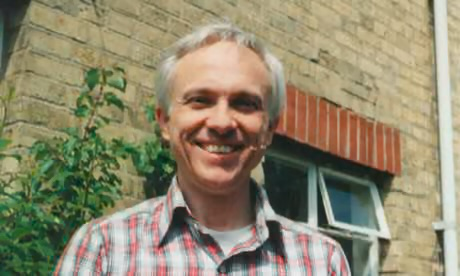
Because his work bridged separate segments of maths, acting as a foundational base for others to build on, he never became a household name. K-theory is a niche subject with little day-to-day or classroom relevance, and Quillen acted as a stepping stone towards the larger, grand works that would take the spotlight. Yet, without him, an entire field of mathematics and thought would remain barren and untouched.
3. Évariste Galois
Another fascinating case is Évariste Galois, a legendary French mathematician who laid the foundations of modern abstract algebra during his teenage years in the early 19th century. He suffered a rough childhood marked by political and religious tensions, his father’s suicide, and failed entrance exams to elite schools despite his genius. He worked in areas of polynomial algebra and group theory, and laid the groundwork for solving geometric mysteries.
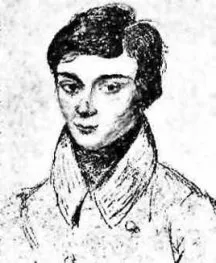
Despite his fame among mathematicians, he flies under the general radar, and what makes him so intriguing is the circumstances of his death. Galois was a figure tangled in many political and religious scandals, which eventually contributed to his demise at the young age of 20, when he died from a gunshot wound to his abdomen during a pistol duel. His bad luck cut short a great young mind, who could have achieved so much more had he survived.
4. Sofia Kovalevskaia
Lastly is Sofia Kovalevskaia, a Russian mathematician in the 19th century, who lived in a time of a male dominated mathematics field. Her interest in calculus sprouted in childhood, when a lack of money meant calculus papers were used as wallpaper in her home. She spent hours staring at the arcane symbols, perplexed by their meaning and struggling to understand them. As an adult, she faced a world where it was illegal for women to go to university, so Kovalevskaia had to contract a “fictitious marriage” with one Vladimir Kovalevskii just to study abroad. Upon becoming a mathematician, she published three key papers on calculus, heralded now as major papers on partial differential equations. She also wrote a novel, Nihilist Girl.
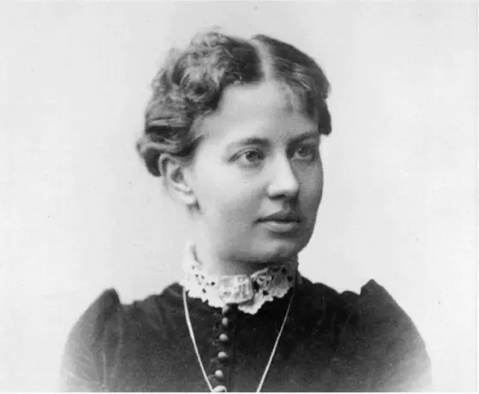
Her fly under the modern mathematical radar is due to the extreme prejudice faced during her life in a discriminatory Russia. This drags on today with remaining current indifference towards women in mathematics.
5. Forgotten Civilisations
The history of unrecognised mathematical greats does not consist only of individual figures but also involves the frequent disregard of entire civilisations and empires. Frequently, racial prejudice or ingrained ideologies within certain empires block the recognition of their achievements. As with the previous examples, the Golden Age of Islam in the Middle East and the achievements of medieval India have been left without notice or appreciation.
5.1 The Golden Age of Islam
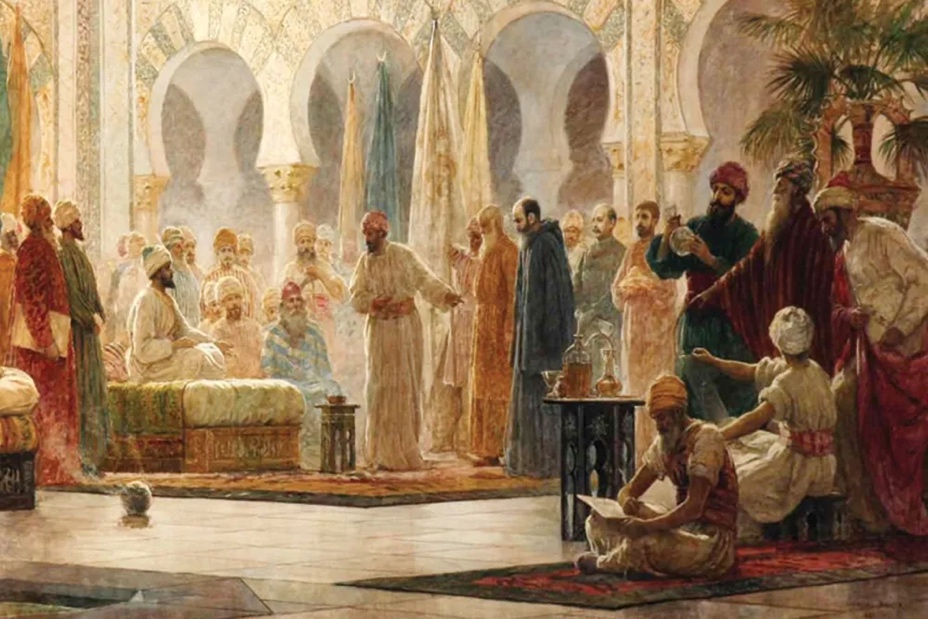
The Golden Age of Islam was a historic peak of the Islamic world from the 8th to the 15th century. Throughout this period, Islamic scholars developed some of the greatest mathematical systems and theories before many Western mathematicians did. A major example is the development of algebra, which integrated unknown variables and balanced equations centuries earlier than in other parts of the world. Al-Khwarizmi, whose Latinised name gives us “algorithm”, is still considered by some to be the father of algebra, with the subject named after his book, Al-Jabr.
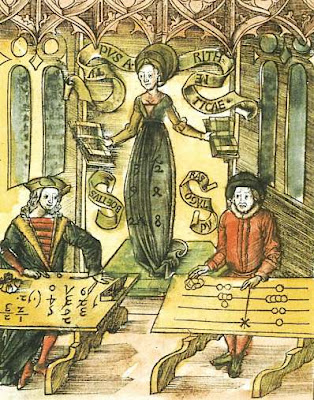
Trigonometrical ideas like sine, cosine, and secant, as well as the modern Pythagorean theorem, were also explored and developed further in the medieval Islamic world, building on earlier Greek and Indian work. The entire modern numerical system of counting was also developed in India and spread to Europe through the Arab-Muslim world. Replacing the Roman numeral system, this system utilised positional value, using the ten modern digits.
5.2 Medieval India
Medieval India was another mathematical powerhouse that was overlooked. Indian mathematicians like Brahmagupta, who developed the concept of zero and was among the first to use terms like , are key figureheads in mathematics who have been left in the shadows of history. This is due to racial stereotypes and discrimination, as well as preconceived beliefs and opinions about India and its history. Indian mathematicians of the Kerala school also developed infinite series and the foundations of calculus, emerging from some of the brightest academies ever and discovering ideas before Newton did.
6. Conclusion
This blind eye towards whole communities, cultures, and civilisations has resulted from the dominance of Western figures and ideas. The plethora of great mathematicians throughout history makes it impossible to credit every single one of them with what they deserve, but appreciating and acknowledging those we can is necessary to eliminate cultural discrimination and the lack of recognition in mathematics. So, when pursuing equations and formulas, take a moment to appreciate the underrecognised mathematicians who built the foundations on which modern mathematics stands today.
References
O’Connor, J. J. and Robertson, E. F. (1996). “Évariste Galois”. MacTutor History of Mathematics Archive, University of St Andrews. Available at: https://mathshistory.st-andrews.ac.uk/Biographies/Galois/.
O’Connor, J. J. and Robertson, E. F. (1999). “Arabic mathematics: forgotten brilliance?”. MacTutor History of Mathematics Archive, University of St Andrews. Available at: https://mathshistory.st-andrews.ac.uk/HistTopics/Arabic_mathematics/.
O’Connor, J. J. and Robertson, E. F. (2015). “Daniel Gray Quillen”. MacTutor History of Mathematics Archive, University of St Andrews. Available at: https://mathshistory.st-andrews.ac.uk/Biographies/Quillen/.
O’Connor, J. J. and Robertson, E. F. (2021). “Sofia Vasilyevna Kovalevskaya”. MacTutor History of Mathematics Archive, University of St Andrews. Available at: https://mathshistory.st-andrews.ac.uk/Biographies/Kovalevskaya/.
Pearce, I. G. (n.d.). “Indian Mathematics: Redressing the balance”. MacTutor History of Mathematics Archive, University of St Andrews. Available at: https://mathshistory.st-andrews.ac.uk/Projects/Pearce/.
Stewart, I. (2020). “Five of the most famous mathematicians you’ve (probably) never heard of”. BBC Science Focus Magazine. Available at: https://www.sciencefocus.com/science/five-of-the-greatest-mathematicians-youve-probably-never-heard-of.
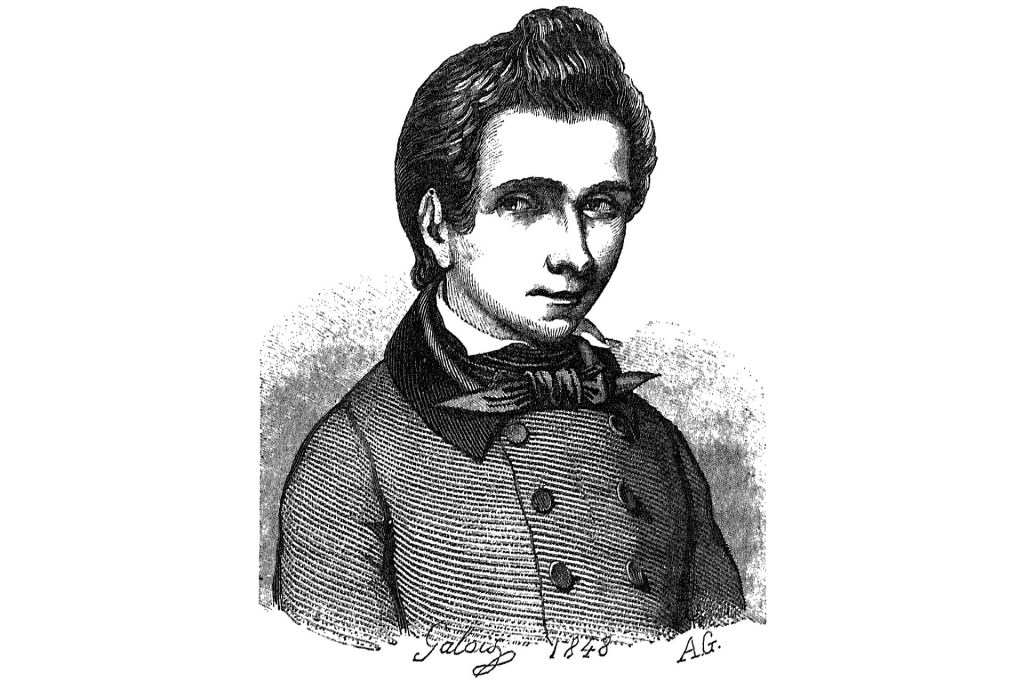
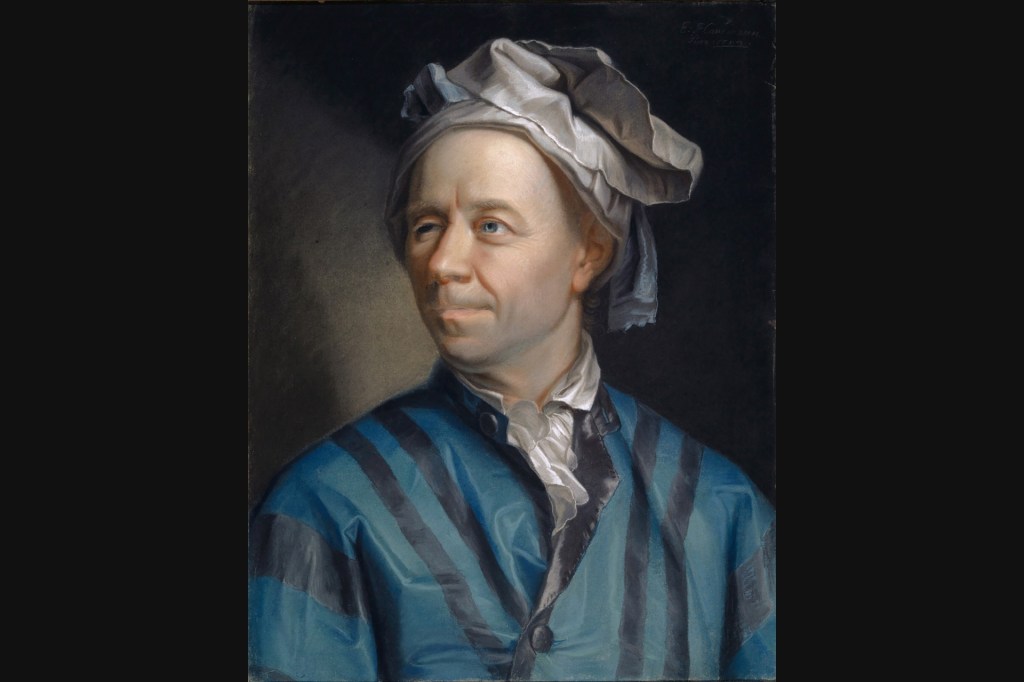
Cover image: portrait of Évariste Galois by Alfred Galois (1848), public domain, via Wikimedia Commons.


Leave a Reply